![O[yes]](https://youngemployeesafety.org/wp-content/uploads/2024/10/logo-tagline-500-new.png "logo-tagline-500-new")
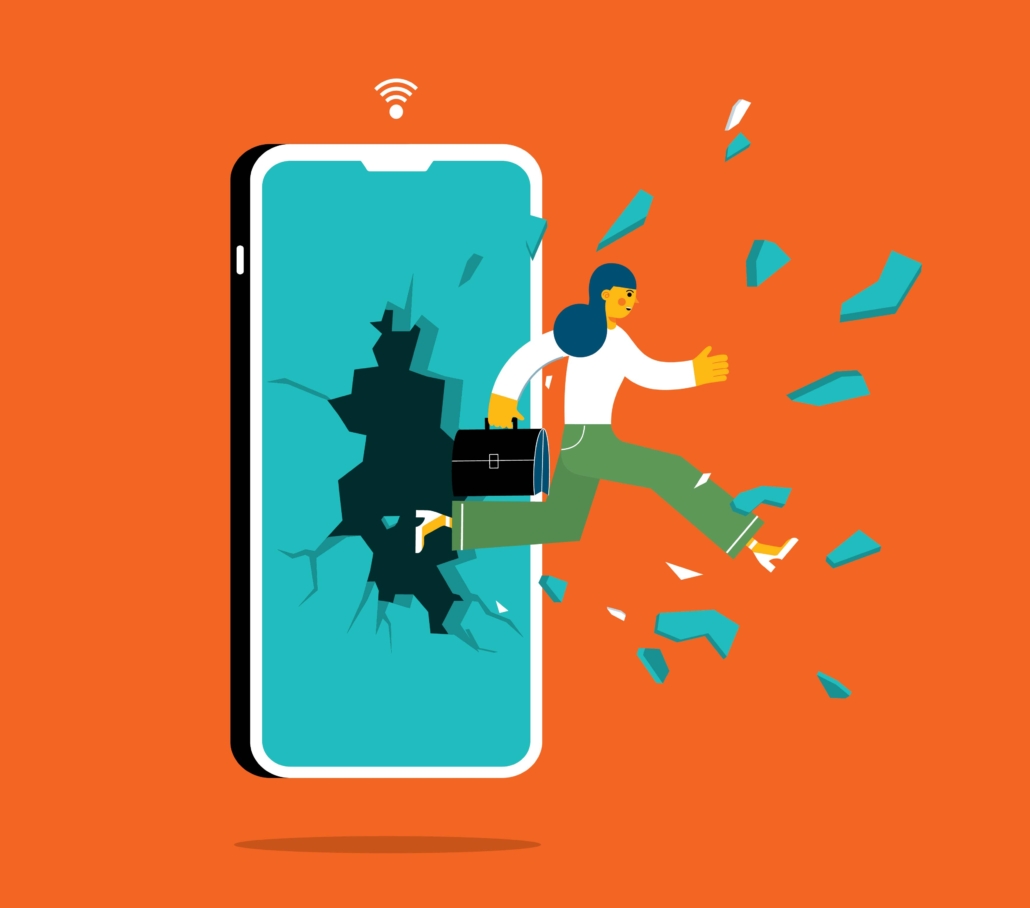
Damsel in Digital Distress: Reclaiming Connection in a Digitally Disconnected World
by Annalyn Jensen
For the past two years, my top New Year’s resolution has been to spend less time on my phone. From flat out disactivating social media to using screen time controls to downloading accountability apps that aren’t as easily override-able, I’ve tried a lot of things to disconnect digitally and reconnect with the world around me. Some of these helped, at least for a little bit, but I always come back to the same goal: I want to feel more present, have more meaningful interactions, and stop losing hours to mindless scrolling.
For me and many of my peers, what used to be casual, occasional use now feels like a constant companion. According to a survey done in August of 2023, the average American checks their phone about 144 times per day. These “quick checks” often end up spiraling into hours lost to content that we barely, if at all, remember consuming.
Even when we know our habits aren’t healthy, changing them is a different story.
This is because the problem isn’t just personal discipline. Social media apps. streaming platforms, and even news sites are designed with algorithms and feedback loops meant to hold and divert our attention. In this system, our attention is the commodity, and the house always wins.
In fact, social media overuse is a big enough issue that the U.S. Surgeon General’s 2023 advisory declared that it poses a “profound risk of harm to the mental health and well-being.” Excessive screen time has been linked to increased anxiety, sleep disruption, attention problems, and loneliness. On a societal level, it erodes our ability to focus, rest, and connect, which are three basic pillars of well-being.
Now, I don’t want to demonize technology, because it isn’t inherently bad. Phones are key tools for staying in touch with loved ones, organizing social movements, and navigating roads (I need my GPS!). Our problems are not from mere use of technology, but when use becomes unintentional, mindless, or even compulsory. This is what causes phone use to undermine meaningful social connection.
Even introverts need meaningful social interaction. Being socially connected doesn’t have to mean being the life of the party. It means being seen, supported, and understood. It’s a key human need, regardless of personality.
Connection isn’t just an individual need; it’s a societal one too. When people feel part of something, they’re more likely to show up for others, contribute to community, and create positive change. The bottom line is that connection makes us all stronger.
Unfortunately, not every interaction brings connection. While we don’t always need a multi-hour deep conversation or a group hangout, we do need presence.
Meaningful interaction is really about attention and intention. Whether it’s a quick check-in or sitting in silence together, the difference is whether or not we’re fully there.
The problem with social media is that it offers this illusion of presence without offering the real substance that allows us to feel grounded, energized, and really seen. We see people’s faces, we hear snippets of their thoughts, and we can interact with likes, comments, and direct messages, but it’s just not as satisfying as the real thing.
Scrolling on social media delivers quick hits of dopamine, but it more often than naught leaves us feeling more disconnected than before. This is because real connection takes time, vulnerability, and attention. With curated highlight reels, performative interactions, and endless comparison, social media provides inadequate, cheap replacements of what we need to take care of our social needs.
It’s not that social media can’t be part of connection. We just have to be careful that it doesn’t replace it.
For me, fixing my relationship with my phone will take more than deleting apps and “being on my phone less.” Here are some small habits I’m trying out to reclaim connection in my life:
- Schedule Digital-Free Time
I really don’t need to see my phone 24/7. Even something as little as keeping my phone out of reach or out of sight can help me avoid mindlessly checking it and vanishing to the technology void.
- Don’t Sleep with your Phone
This one is huge for me. I use my phone as my alarm, so it usually lives under my pillow. This might sound fine on the surface, but here’s what actually happens:
Set alarm → Double check alarm → 1 hour later, I’ve fallen into an Instagram rabbit hole
Even when I blocked social media, I’d find myself checking emails or reading books when I was supposed to be getting some much needed rest. So, I’m going to use an actual alarm clock and charge my phone on the other side of my room.
- Transform Memes into Meetups
Instead of just sending funny reels or shorts, I’m trying to turn these moments into more real check-ins. Even just a short message saying, “this made me think of you, want to catch up sometime soon?” can go a long way.
- Putting People before Devices
While obviously this means giving people my full attention while I’m with them in person, this also means giving people my full attention when I’m with them virtually. Often when I’m on a phone call, I can get distracted by a different notification that comes on my phone. Before I know it, I have to ask my Mom to repeat what she just said because I was busy reading a text message that had nothing to do with what she was saying.
- Ask Before You Scroll
When I catch myself scrolling on social media, I’m trying to pause and ask myself why I’m scrolling.
What am I looking for?
Am I bored? Anxious? Avoiding something? Missing my friends?
Asking myself these questions can break the automatic scroll and replace it with something more intentional that actually addresses my needs as a human being.
Changing my relationship with my phone is not easy, especially when it comes to social media. It’s uncomfortable, frustrating, and without doubt it is not a linear journey of success. Just like any habit though, consistency over time will help lead to the changes I want in my life.
We don’t have to pull a complete 180 overnight. In fact, demanding rapid, instantaneous change is probably the ultimate recipe for disaster. So, start small by choosing one intentional habit and stick with it.
Because reclaiming connection starts with reclaiming our attention.

Annalyn Jensen is a recent graduate of Utah State University’s Public Health program with an emphasis in Industrial Hygiene. Originally from Las Vegas, she loves learning about protecting worker health and exploring how applied science can improve everyday workplaces. She is beginning a master’s program in Occupational Health at the University of Utah, where she looks forward to contributing to research on novel sampling methods. In her free time, she enjoys hiking, reading, and swing dancing. She aspires to one day hike the Grand Canyon rim to rim and become a Certified Industrial Hygienist (CIH).

